Esports, short for electronic sports, has transformed from a niche hobby into one of the most influential industries in modern entertainment. What was once a pastime for a few dedicated gamers has evolved into a global phenomenon that rivals traditional sports in audience size, cultural influence, and economic impact. The story of esports is a story of passion, technology, and community converging into a powerful cultural movement. In this extensive exploration, we will dive into the history, growth, structure, economy, and future of esports, and how it reshaped the very definition of competition.
The Origins of Esports: Humble Beginnings
The roots of esports stretch back farther than many realize. Competitive gaming did not begin with flashy arenas or million-dollar prizes but rather with small-scale tournaments in the late 1970s and 1980s. One of the earliest recorded gaming competitions took place in 1972 at Stanford University, where students competed in the game “Spacewar.” The prize was modest — a year’s subscription to a magazine — but the concept of competitive gaming had begun.
The 1980s brought arcade games and high-score competitions to the mainstream. Games like “Pac-Man,” “Donkey Kong,” and “Space Invaders” turned players into local legends. These arcade machines inspired people to challenge one another not for money but for pride and recognition. In 1980, Atari hosted the “Space Invaders Championship,” drawing over 10,000 participants across the United States — a milestone event that hinted at the potential for organized gaming.
Through the 1990s, personal computers and home consoles like the Nintendo Entertainment System and Sega Genesis brought multiplayer games into living rooms. Titles like “Street Fighter II” and “Mortal Kombat” became synonymous with local tournaments and competitive bragging rights. Yet, it wasn’t until the rise of the internet that esports began its ascent toward mainstream recognition.
The Internet Era: Birth of Global Competition
The late 1990s were pivotal for the development of esports. Online connectivity allowed players to face off across cities, countries, and continents. Games like “Quake,” “StarCraft,” and “Counter-Strike” established the foundation of competitive online play. South Korea, in particular, emerged as a pioneering nation, fostering gaming as a cultural phenomenon supported by government and corporate sponsors.
Televised gaming became a reality with South Korea’s dedicated esports channels broadcasting “StarCraft” matches to millions. Professional players gained celebrity status, and esports leagues formed the early structure of organized competitive gaming. In the West, events like the Cyberathlete Professional League (CPL) and Major League Gaming (MLG) emerged, giving professional gamers a legitimate stage to perform and earn recognition.
This era also saw the birth of professional teams, sponsorships, and tournaments with real prize money. Esports was no longer just a hobby; it was becoming a profession.
The Rise of Iconic Games and Genres
Esports is not defined by a single game but by a collection of genres that appeal to diverse audiences. Each game brings its own mechanics, communities, and legends, contributing uniquely to the esports landscape.
First-Person Shooters (FPS)
Games like “Counter-Strike,” “Call of Duty,” and “Overwatch” have dominated the FPS esports scene. They require precision, teamwork, and lightning-fast reflexes. “Counter-Strike: Global Offensive” (CS:GO) has become one of the longest-standing competitive games, with tournaments like ESL One and PGL Major drawing millions of viewers worldwide.
Real-Time Strategy (RTS)
“StarCraft” and “Warcraft III” laid the groundwork for RTS esports, particularly in South Korea, where players like Flash and BoxeR became icons. The genre’s demand for rapid decision-making and multitasking made it a true test of mental agility.
Multiplayer Online Battle Arena (MOBA)
Perhaps no genre has defined modern esports like the MOBA. Games such as “League of Legends” and “Dota 2” created enormous ecosystems, with international tournaments like The International and the League of Legends World Championship offering multi-million-dollar prize pools and record-breaking viewership numbers.
Sports Simulations
Games like “FIFA,” “NBA 2K,” and “Rocket League” bring the excitement of real-world sports into digital form. They blend athletic fandom with gaming skill, appealing to both sports fans and gamers alike.
Battle Royale and Fighting Games
The fighting game community, represented by titles such as “Street Fighter,” “Tekken,” and “Super Smash Bros.,” continues to thrive on individual skill and grassroots competition. Meanwhile, newer genres like Battle Royale games, including “Fortnite,” “PUBG,” and “Apex Legends,” have captured the attention of younger audiences and propelled esports into mainstream pop culture.
The Business of Esports: A Billion-Dollar Industry
What was once a passion-driven scene is now a professionalized, billion-dollar global industry. Esports revenue streams come from multiple sources — sponsorships, advertising, ticket sales, streaming rights, in-game purchases, and merchandise. Major corporations have entered the space, from hardware manufacturers to energy drink companies, recognizing the marketing power of reaching the highly engaged gaming demographic.
Prize pools have skyrocketed. Dota 2’s The International, for instance, has offered prize pools exceeding tens of millions of dollars, much of it crowdfunded by the game’s community. Players, teams, and organizations now have managers, coaches, and analysts, just like traditional athletes. Top players can earn salaries, sponsorships, and streaming income that rival or surpass professional athletes in some sports.
Esports organizations such as Team Liquid, Cloud9, Fnatic, and T1 have become household names in gaming culture. They function as both competitive teams and lifestyle brands, producing content, selling merchandise, and building global fanbases.
The Role of Streaming Platforms
Streaming platforms like Twitch, YouTube Gaming, and Facebook Gaming have revolutionized how esports content is consumed. Instead of waiting for televised broadcasts, fans can tune in live from anywhere in the world to watch their favorite teams and players compete. Streaming democratized esports viewership and allowed personalities to rise as entertainers, commentators, and influencers.
Twitch, in particular, transformed the way players interact with audiences. Esports events are now massive digital spectacles with live chat engagement, fan participation, and community-driven experiences. The combination of streaming and social media has made esports not only a competition but also a form of interactive entertainment.
The Cultural Impact of Esports
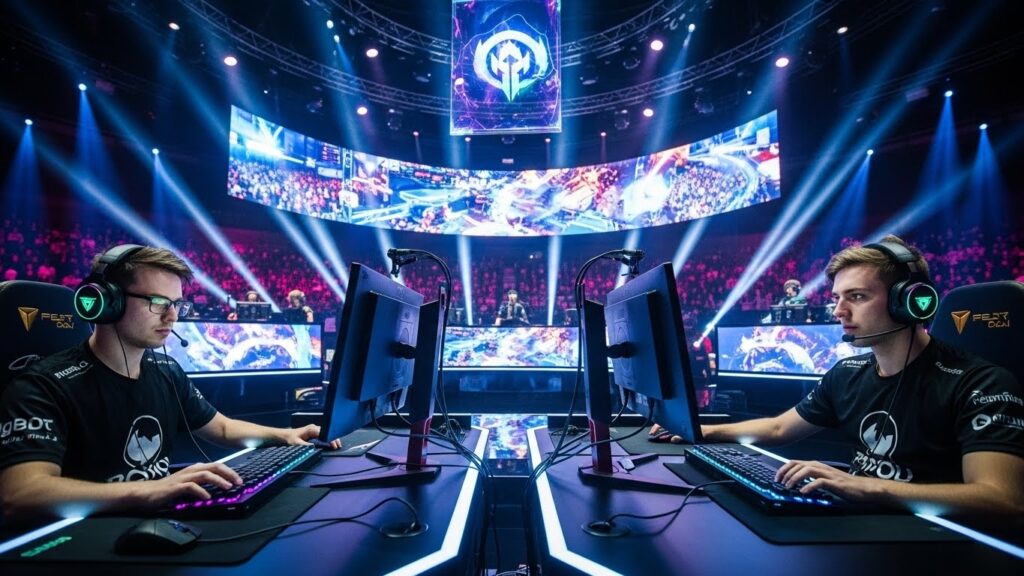
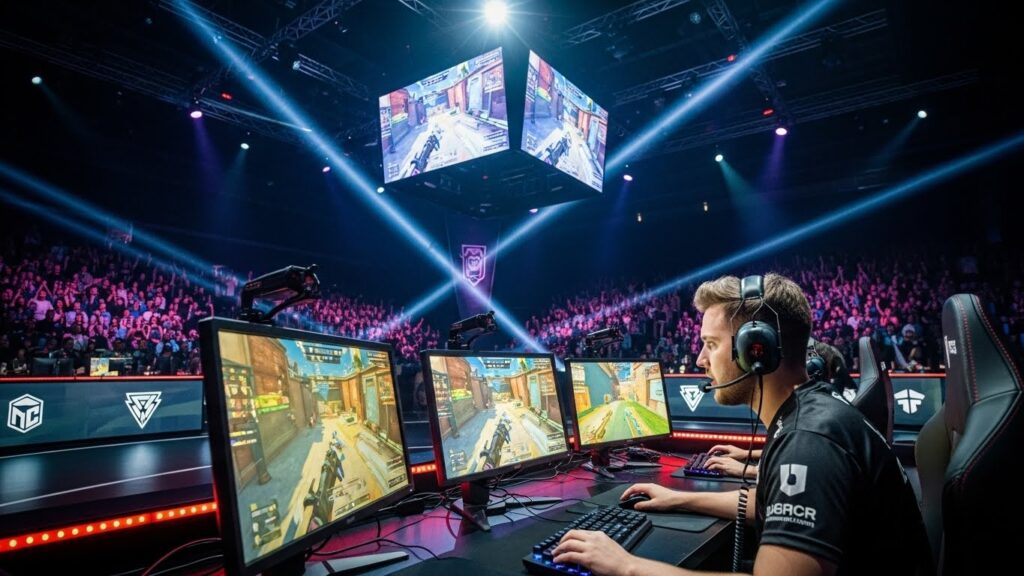
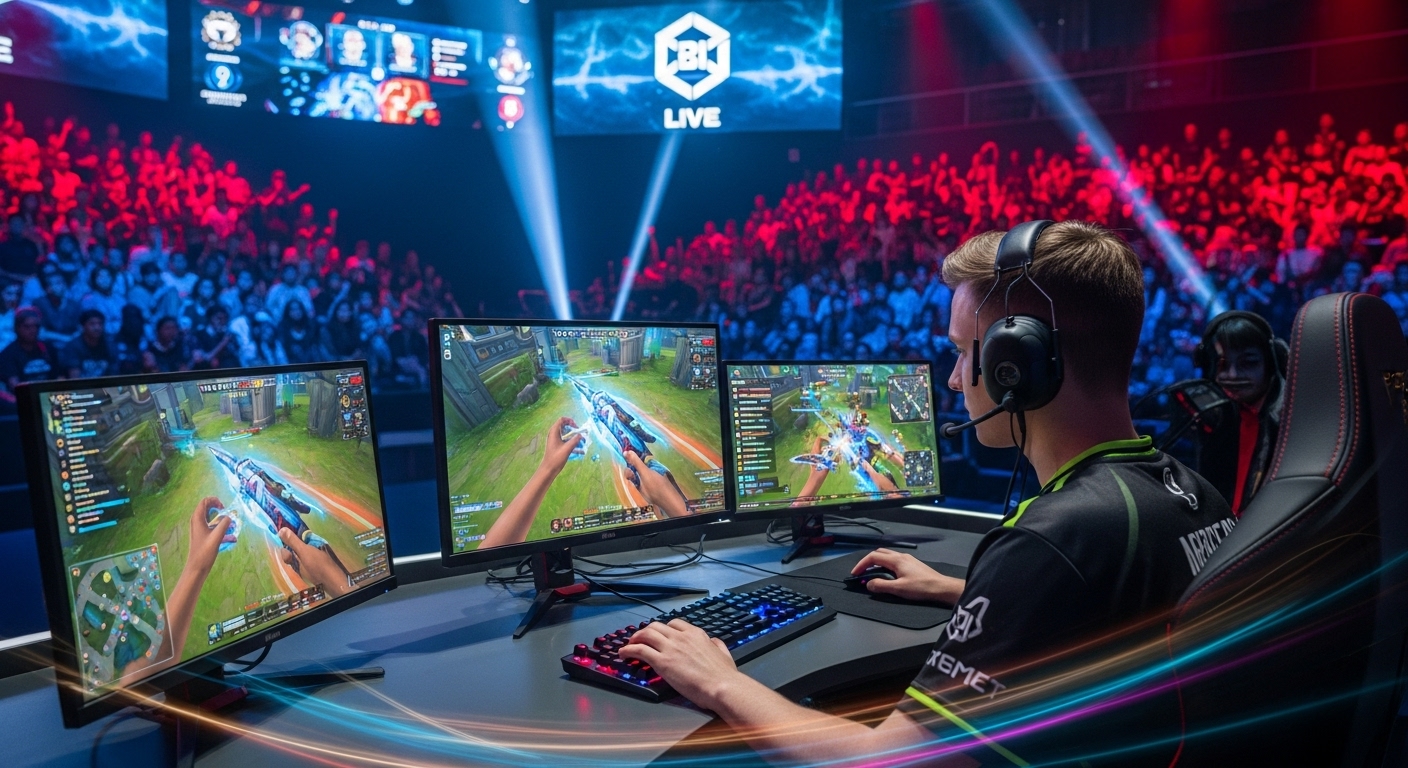
Esports is more than just competition; it’s culture. It has created new forms of identity and belonging. Gamers around the world unite under shared fandoms, online communities, and digital events. Esports tournaments fill arenas, with fans chanting for their favorite teams just as they do for soccer or basketball.
Moreover, esports has challenged traditional notions of what sports can be. It redefines athleticism, not as physical endurance but as mental agility, reaction speed, and teamwork. The inclusion of esports in discussions about future Olympic events illustrates how far the medium has come in gaining legitimacy.
Esports also influenced music, fashion, and media. Collaborations between game developers and popular artists — such as virtual concerts inside “Fortnite” or custom merchandise lines for esports teams — demonstrate how gaming culture has blended with mainstream entertainment.
The Players: Athletes of the Digital Age
Professional esports players are often compared to traditional athletes, and rightfully so. Their training regimens are rigorous, involving hours of practice, strategy sessions, physical conditioning, and mental health management. Reaction times, hand-eye coordination, and strategic thinking are honed through repetition and analysis.
Many players begin their journey at a young age, climbing the competitive ladder through ranked matches and amateur tournaments before being scouted by professional organizations. The lifespan of a pro gamer’s career can be short, often peaking in their early twenties due to the intense mental demands, but opportunities for coaching, content creation, and entrepreneurship often follow.
Behind the players are coaches, analysts, and support staff who break down opponents’ strategies, develop playbooks, and ensure optimal performance. The structure and professionalism of esports teams now mirror those of established sports organizations.
The Global Esports Ecosystem
Esports is truly global. Each region has its own dominant games, leagues, and fan cultures. South Korea remains a powerhouse, especially in games like “League of Legends” and “StarCraft.” China boasts massive esports arenas and millions of fans who follow local and international tournaments. North America and Europe have developed thriving leagues, with franchised systems in games like “Overwatch” and “Call of Duty.”
Emerging regions such as Southeast Asia, the Middle East, and Latin America are rapidly growing, fueled by mobile gaming. Titles like “Mobile Legends: Bang Bang,” “Free Fire,” and “PUBG Mobile” have made esports accessible to millions who may not own high-end gaming PCs. The rise of mobile esports represents one of the fastest-growing segments of the industry.
Esports in Education and Career Development
The integration of esports into education is one of the most exciting developments of recent years. Universities and high schools across the world now offer esports scholarships, teams, and degree programs focused on game design, management, and broadcasting. Students learn valuable skills such as teamwork, leadership, communication, and strategic thinking through competitive gaming.
Beyond playing professionally, esports opens doors to various career paths: event management, marketing, game development, coaching, broadcasting, and more. The industry’s growth has created thousands of new jobs, establishing esports as a legitimate career field rather than a fringe pursuit.
The Challenges Facing Esports
Despite its rapid success, esports faces significant challenges. Issues such as player burnout, match-fixing, lack of regulation, and unequal pay have surfaced. Maintaining integrity and fair competition remains a concern as the industry grows. Additionally, balancing commercialization with community authenticity is crucial to ensuring sustainable development.
Another major challenge is inclusivity. While esports is open to anyone with a computer or console, the industry still struggles with diversity, particularly in gender representation. Women and marginalized groups face barriers and harassment that must be addressed through better policies, education, and support networks.
There is also an ongoing debate about player rights and unionization. As esports organizations become more corporate, ensuring players have fair contracts, health protections, and work-life balance becomes increasingly important.
The Technological Backbone of Esports
Behind every esports match lies cutting-edge technology. High-performance PCs, low-latency networks, and sophisticated game engines ensure seamless competition. The rise of 5G, cloud gaming, and artificial intelligence is set to transform how esports is played and watched.
Augmented and virtual reality technologies are beginning to blend digital and physical worlds, offering new spectator experiences. Broadcast innovations such as in-game camera systems, real-time statistics, and virtual arenas make esports viewing more dynamic than ever.
The data-driven nature of esports also allows for advanced analytics, helping teams make strategic decisions based on player performance metrics. These technologies not only improve gameplay but also enhance fan engagement.
The Future of Esports
The future of esports looks brighter than ever. As technology advances and younger generations continue to embrace gaming as a cultural norm, esports will only expand. The potential inclusion of esports in international sporting events could bridge the gap between digital and physical competition even further.
Franchise-based leagues, global tournaments, and cross-platform integration will continue to professionalize the scene. Meanwhile, the convergence of virtual reality, AI-driven game design, and blockchain-based economies may redefine ownership and participation in gaming ecosystems.
Esports is poised to become the universal language of digital entertainment — one that transcends geography, language, and culture.
Conclusion: The Legacy of Esports
From dimly lit arcades to sold-out stadiums, the journey of esports is nothing short of extraordinary. It embodies the evolution of technology, the power of community, and the limitless creativity of human competition. What began as simple pixelated duels has grown into an empire of passion, innovation, and global connection.
Esports represents more than just playing games. It is a celebration of skill, teamwork, and imagination. It shows that competition can thrive in virtual worlds as much as in physical arenas. As the industry continues to evolve, it will inspire new generations to dream, compete, and connect through the digital frontier.
In the end, esports is not just the future of gaming — it is the future of sports itself.